
How to Choose the Right Turnstile for a Commercial Building
- 12 min read
- By Turnstile Security Systems Compliance Team
The right way to choose a turnstile for a commercial building is to start with your security needs and your busiest hour, then count your lanes, and pick the type last. Many buildings choose a style they like first. Later they find long lines at the door or weak spots in their security. At Turnstile Security Systems, we help building owners pick the right setup every day. This guide walks you through each step in plain words, so you can make a choice you feel good about.
Why Does Turnstile Selection Go Wrong in Commercial Buildings?
Selection goes wrong when buyers overlook how their building actually operates. A turnstile provides strong security but still creates problems if it does not suit the building’s entry process. Poor planning can lead to long queues, access problems, and delays for employees and visitors. Before choosing a model, consider how people enter, who needs access, and how the entrance will be managed.
What Security Level Does Your Building Need?
Your security level depends on what you are protecting and who is allowed inside. The lobby of a regular office needs a different level than a floor that holds servers or private records. Before you look at any product, write down what each entrance protects and what would happen if the wrong person got in.
How Big Is Your Tailgating Risk?
Your tailgating risk is high when many people share one entrance and nobody checks who follows whom. Tailgating is when a person follows an approved person through the door without using a card. A simple gate can stop some of this, but a higher level of security should notice it right away. Think about who comes in each day, such as staff, visitors and delivery workers, and how easily a stranger could slip in behind one of them.
How Do Optical, Tripod and Full-Height Turnstiles Differ?
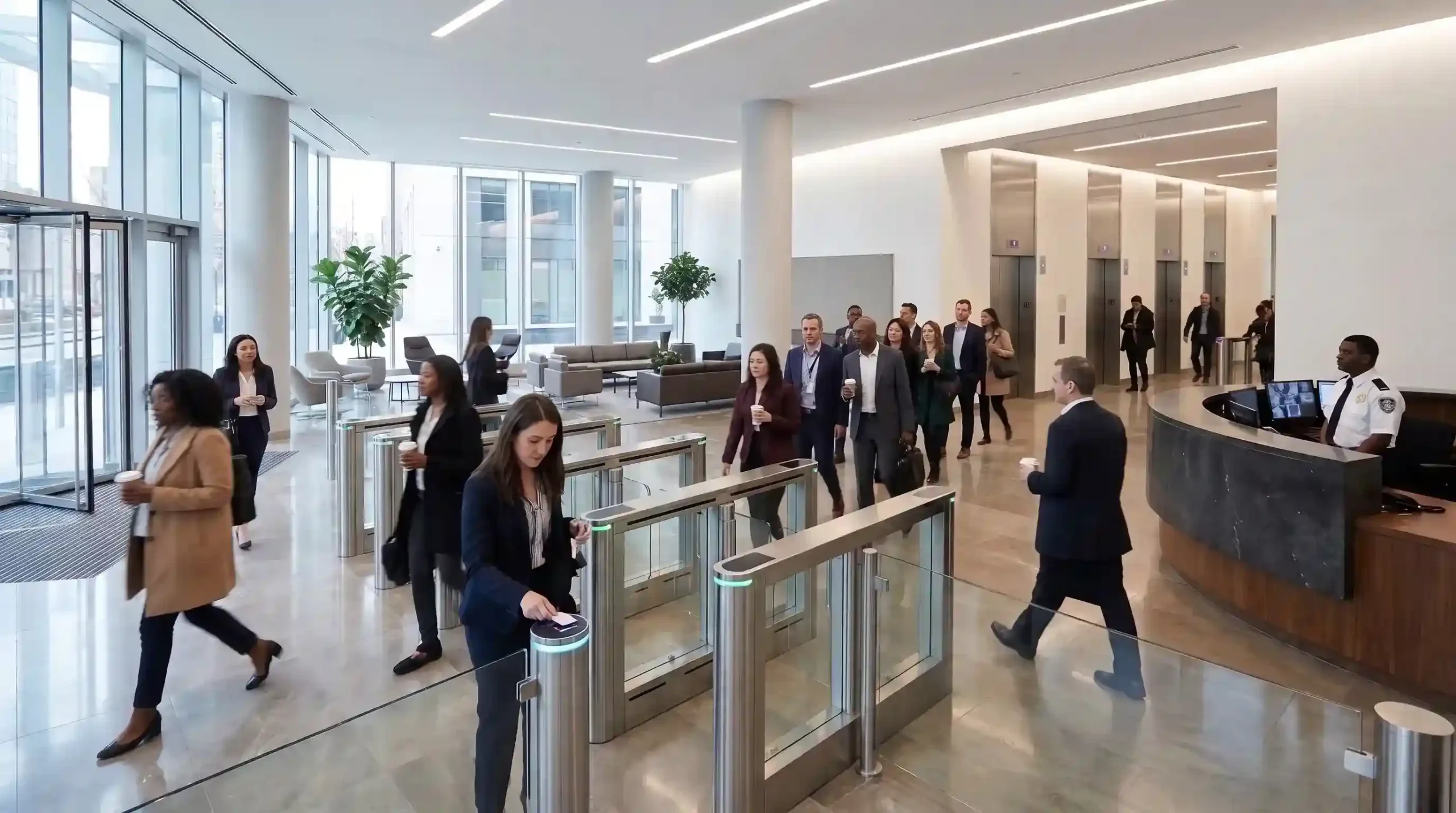
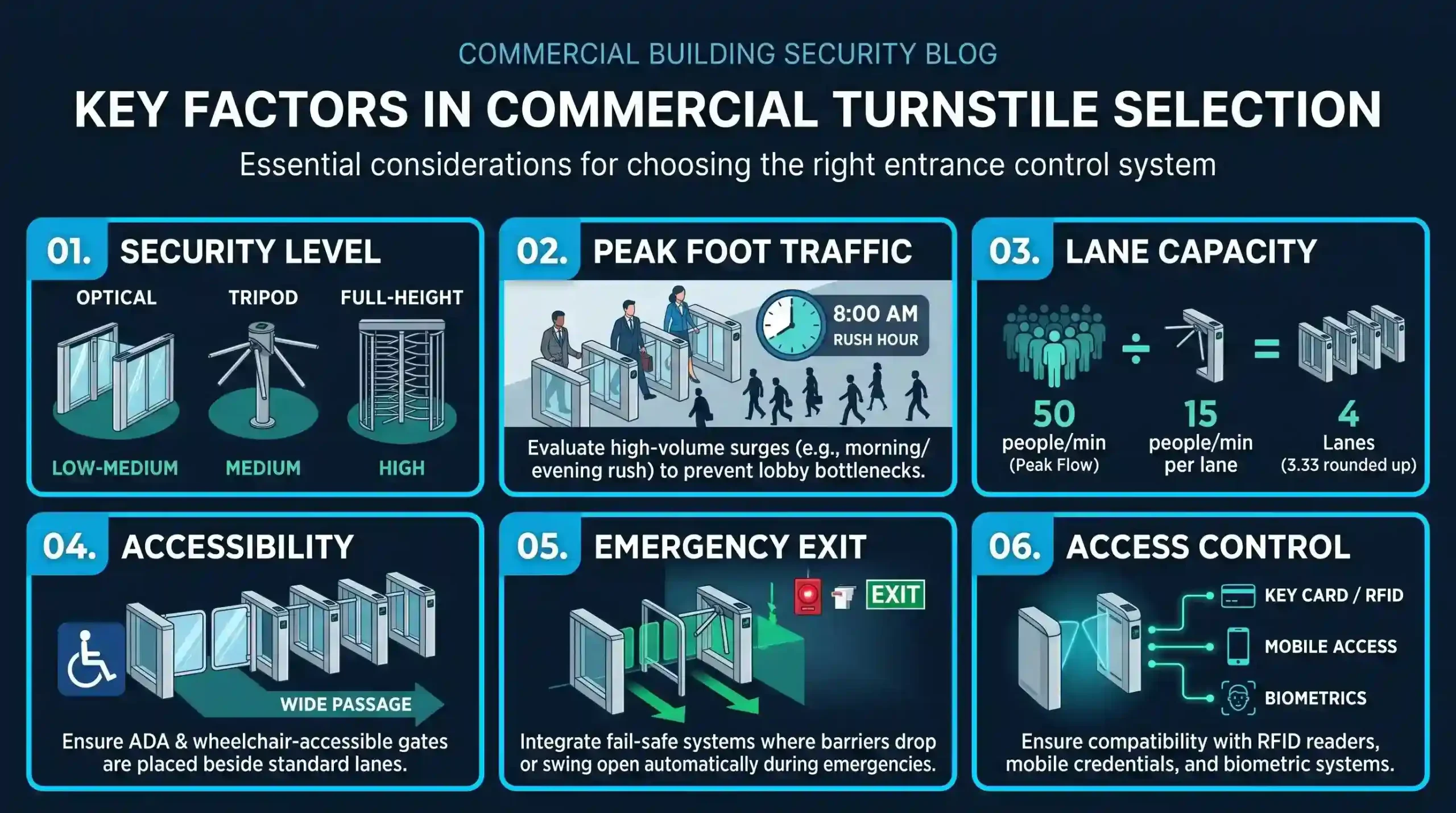
Optical turnstiles feel the most open, tripod turnstiles are simple and fast, and full-height turnstiles give the most protection. Optical turnstiles with glass panels use sensors to spot two people passing on one card, and they still feel open and modern. Tripod turnstiles use three arms that turn, so they are easy to run and good for crowds. Full-height turnstiles give the most protection, but they take more room and feel less welcoming. Most office lobbies sit somewhere in the middle.
How Do You Measure Your Real Peak Traffic?
Count the people who arrive during your busiest 30 minutes, not the total number of people who work in the building. A building with 1,000 workers does not have 1,000 people at the door at the same moment.
When Are Your Peak Hours?
Your peak hours are usually one short rush in the morning and another in the evening. The morning rush often happens between 7 and 9 a.m., and the evening rush often falls between 5 and 6 p.m. Stand in the lobby on a normal busy day and count how many people pass each minute. Repeat this for a few days so you get a fair picture.
How Do Elevators and Waiting Areas Affect Your Traffic?
Slow elevators make lobby crowds bigger, so check how many people your elevators can move. If the elevators are slow, people will pile up in the lobby, and your lanes will look too small. Look at the waiting area too, because people need room to stand while they wait. Plan for the busiest number, because your lanes must handle your worst moment, not your average one.
Why Are Manufacturer Throughput Numbers Not Enough?
A manufacturer’s speed number shows the best case, so real traffic is usually slower. A 2014 study in Transportation Research Procedia by Steven Strege and Michael Ferreira looked at a secure building that added revolving security doors. The team measured how fast real people moved through the doors and used those numbers to build a model. When the model used the maker’s fixed speed instead, the results were too hopeful, and they missed the crowding that happened when many people arrived at once.
People do not all move at the same pace. A visitor who is new to the door may take longer than an employee who uses it every day. Some people also need extra time to scan their cards or understand how the barrier works. Ask your supplier for a realistic operating speed based on your expected mix of staff and visitors, rather than relying on the advertised maximum.
How Many Turnstile Lanes Does a Commercial Building Need?
Divide the number of people per minute at your busiest time by the number one lane that can pass, then round up. Say 50 people arrive each minute and one lane passes 15 people per minute. That gives you about 3.3, so you need 4 lanes. Cutting lanes to save space can backfire. A 2016 workshop paper by T. Caulfield and S. Parkin studied what happens when a secure door is replaced with turnstiles. The team watched camera footage of about 600 employees and visitors during one working day and logged 1,800 sets of actions.
One turnstile added about half a second to each person’s entry, which added up to more than sixty hours over a year for the whole site. With three turnstiles, the time came close to that of the old secure door. A half second sounds tiny, but it grows fast when hundreds of people pass every day. Remember that people leave too, so think about how many lanes face each direction. Some lanes can switch direction, giving you more entry lanes in the morning and more exit lanes in the evening.
Do Commercial Turnstiles Need ADA-Compliant Lanes?
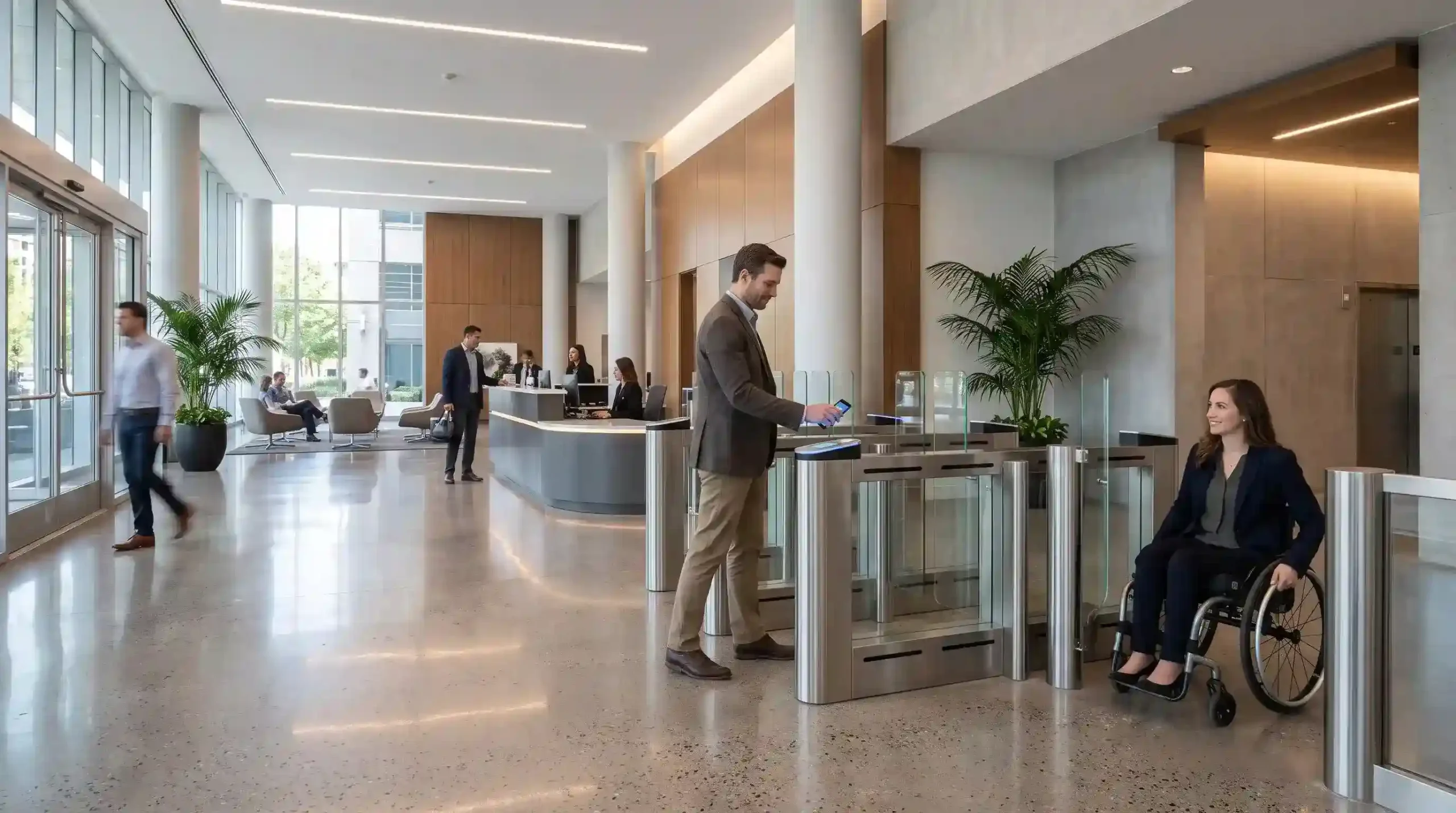
Yes, every entrance needs a lane that people who use wheelchairs, walkers or carts can use. A normal turnstile lane is often too narrow for them, so buildings add a wider lane or a swing gate right next to the other lanes. The rules are a little different in Canada and the U.S., so it helps to read about ADA compliance for turnstiles before you plan your lanes. Buildings in Ontario also follow AODA rules, so check which ones apply to you. Place the wide lane beside the others, so everyone uses the same entrance. It should not be hidden at the far end of the lobby. Plan for it from the start, because adding it later usually means moving other lanes.
How Do Fire Safety and Emergency Exit Affect Your Choice?
Your turnstiles must open freely during a fire or any emergency, so people can leave quickly. Good models release their barriers when the fire alarm goes off or when the power fails. This is called a fail safe operation. Fire codes also set rules for how wide your exits must be and how many people must be able to leave at once.
Before you settle on a plan, it helps to read the NFPA and IBC fire safety rules for turnstiles, since they cover what a lane must do in an emergency. Do not wait until the day of an emergency to find out if the lanes work. Test the emergency mode before opening day, and test it again each year. If you can, run the test with a real crowd, because that shows you how the lobby behaves when many people exit together.
How Does Your Lobby Layout Affect Turnstile Choice?
The size and shape of your lobby decide how many lanes fit and which type works best. You need space in front of the lanes for a line to form, and space behind them so people can walk to the elevators without a jam. A lane that opens straight into a crowded hall will slow everyone down. Compare the width and installation footprint of each model before deciding how many lanes your lobby can accommodate.
Keep the line from blocking the front door and the emergency exit. Look at the style of the room too. Glass, stainless steel and other finishes can be chosen to match your lobby, so the turnstiles look like part of the building and not like something added later. Measure the floor, the ceiling height and the walking paths before you pick a model.
Will the Turnstile Work With Your Existing Access Control System?
Yes, most modern turnstiles connect to common access control systems, but you should confirm this before you buy. Many card readers talk to the turnstile through standard methods such as Wiegand or OSDP, the same ones used on regular doors. That means one system can manage both your doors and your lanes. Check which readers, key cards, phone credentials and visitor tools you use today.
Ask whether the turnstile can send entry records back to your system, so your team can see who came in and when. Also ask who will install the lanes and who will fix them if something breaks. A turnstile that works well with your system saves your staff time every single day.
Which Turnstile Type Suits Which Commercial Building?
Optical turnstiles suit most office lobbies, full-height turnstiles suit high-risk areas, and tripod turnstiles suit busy places where looks matter less. Optical lanes have a clean look and sensors that watch each person who passes. Full-height turnstiles are tall and hard to climb over, so they work best at server rooms, loading areas and outdoor gates.
Tripod turnstiles are simple, strong and quick, which makes them a good fit for crowds, though they feel less polished in a fancy lobby. Many buildings use more than one type. Corporate and data center buildings often use glass lanes at the front door and a tougher barrier on a higher-risk room. Match each door to its own risk instead of using one type everywhere.
What Are the Most Common Selection Mistakes?
The most common selection mistakes include relying only on advertised speed, overlooking accessibility requirements, and failing to plan for future building growth. Buyers may also forget to check access control compatibility or leave enough space for queues and emergency exits.
Before installation, review the complete layout with your supplier. Check lane capacity, accessible entry, emergency operation, and system compatibility. This final review can help identify problems before the turnstiles go into use.
Conclusion
So, what should you do about commercial building turnstile selection? Start with your security needs, measure your busiest 30 minutes, count your lanes, and choose the type last. Make sure you have an accessible lane, a safe way out in an emergency, and a good link to your card system. A little planning now can save you from long lines and weak spots later.
Get Help Choosing the Right Turnstile for Your Building
If you want help with your project, Turnstile Security Systems Inc. has made turnstiles in Canada since 1980. Our team can look at your lobby, your busy hours and your access control system, and suggest a good fit. Contact us to talk about your building.
Frequently Asked Questions
How many lanes does a commercial building need?
The number of turnstile lanes depends on the building’s peak foot traffic, entry and exit patterns, and each lane’s capacity. Larger buildings may need multiple lanes to prevent congestion during busy hours. Accessibility requirements and emergency exit routes must also be considered when planning the layout.
Which turnstile is best for a corporate lobby?
Optical turnstiles are often a good choice for corporate lobbies because they combine a modern appearance with controlled pedestrian access. They work well in offices with regular employee and visitor traffic. However, the best option depends on security needs, available space, traffic volume, and access control requirements.
Do turnstiles slow people down at busy times?
Yes, turnstiles can slow pedestrian movement when many people arrive at once, especially during morning and evening rush hours. Each person must present a valid credential before entering. Installing enough lanes, selecting suitable turnstile models, and using efficient access control systems can help reduce waiting times.
Can turnstiles work with my current card system?
Yes, many commercial turnstiles can integrate with existing card readers and access control systems. Compatibility depends on the turnstile controller, reader type, and communication protocols. Before installation, confirm these technical requirements with your supplier to avoid unnecessary equipment replacements or additional integration costs.
Do turnstiles need to open during a fire?
Yes, turnstile installations must provide safe emergency egress in accordance with applicable fire and building codes. Depending on the system and local requirements, barriers may need to unlock, open, or allow another approved exit route. Always confirm emergency operation requirements with the relevant fire safety authority.
SECURE YOUR BUILDING
Need help choosing access control for your facility? Talk to our team about your entry points and security needs.
Related Articles
Speed Gates vs Optical Turnstiles: Which Is Right for Your Building?
What Are the Three Main Types of Access Control Systems?
AODA COMPLIANCE FOR ACCESS CONTROL: WHAT ONTARIO ORGANIZATIONS MUST KNOW IN 2025
FIND THE RIGHT ACCESS CONTROL SOLUTION
Talk to Turnstile Security Systems about access control for your building. Request a free quote to discuss your requirements.